The future is now
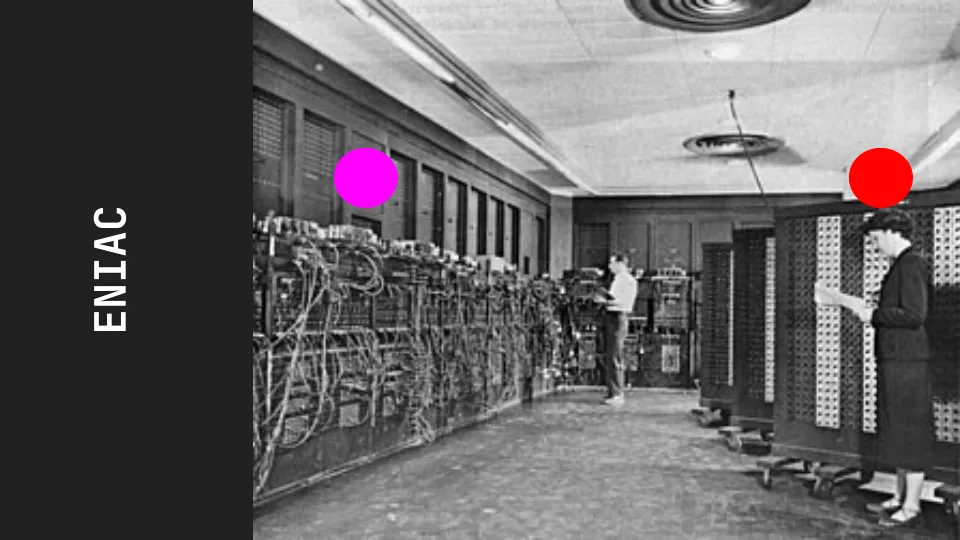
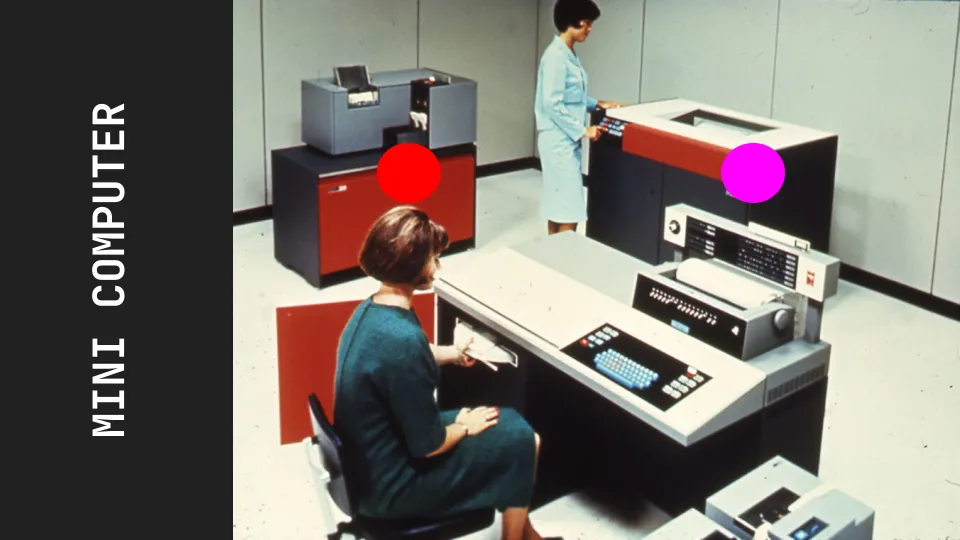
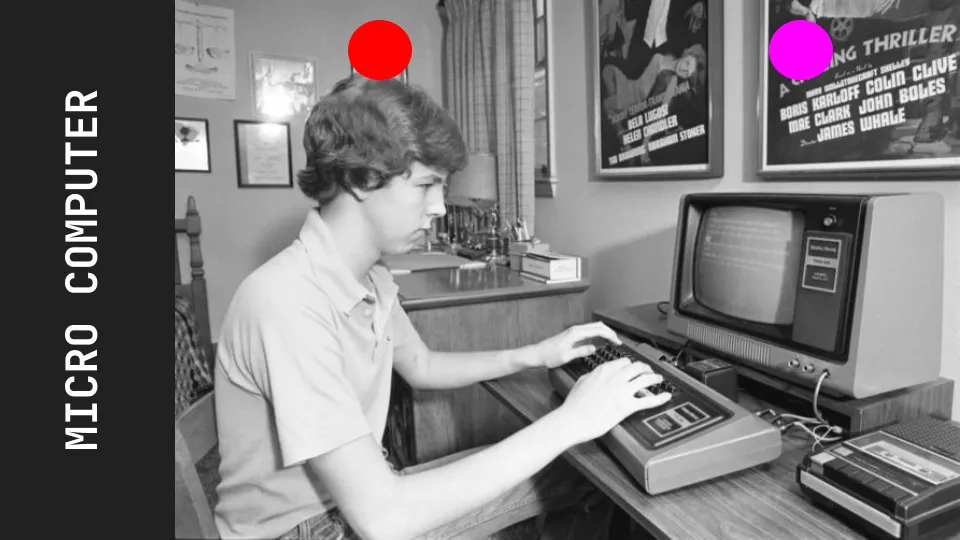
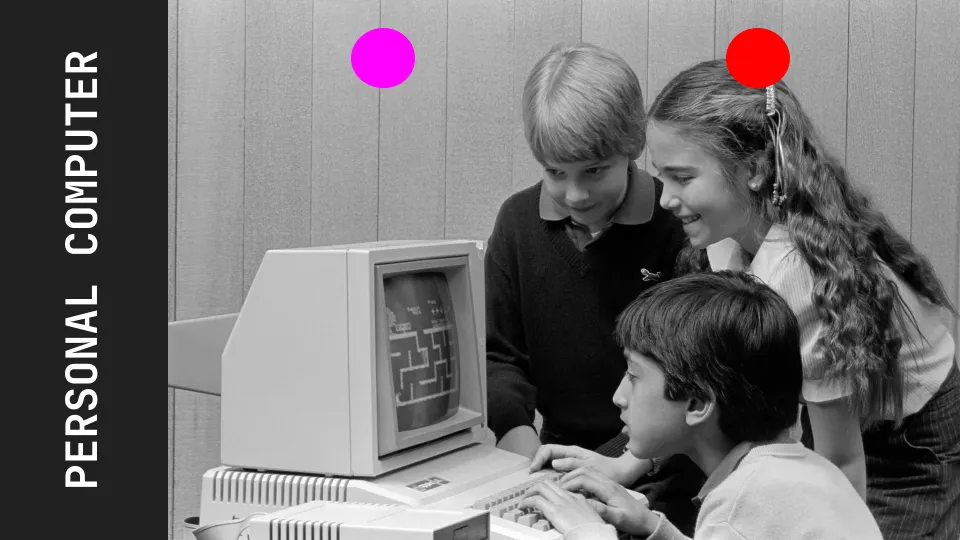
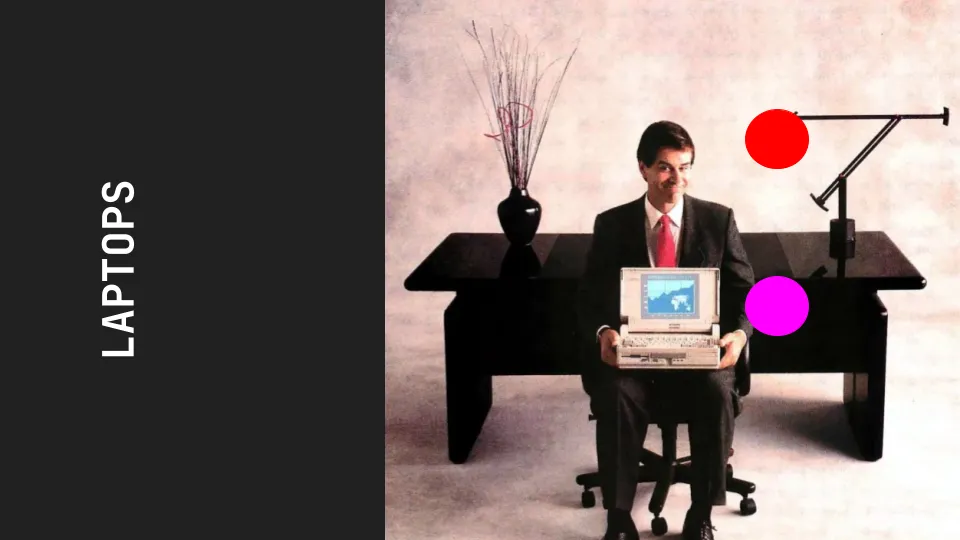
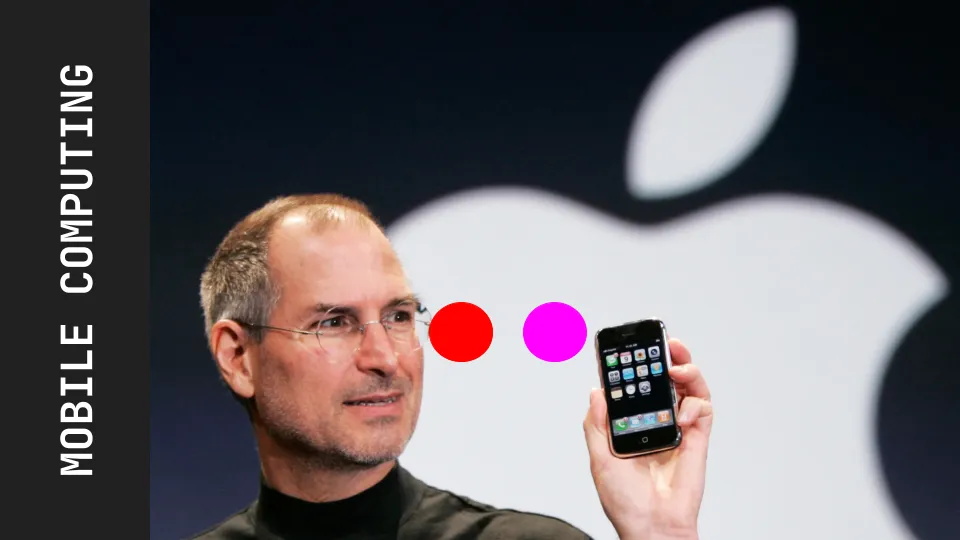
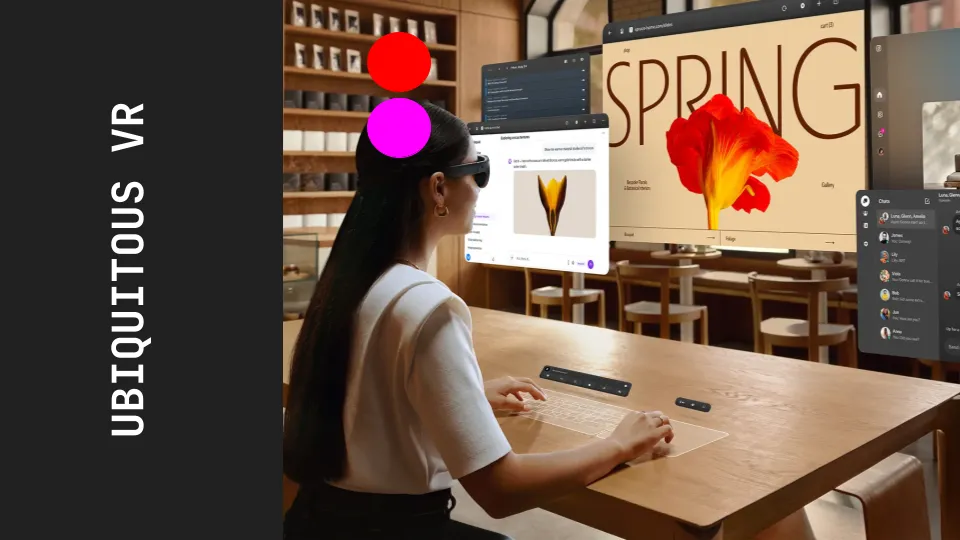
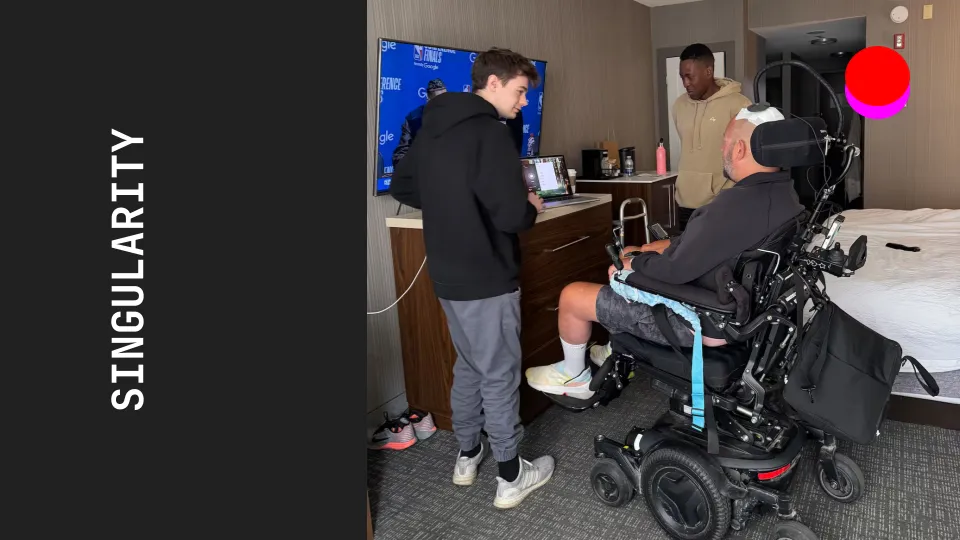
Look at a photo of someone using a computer in any decade and measure one thing: the distance between the brain and the machine. I marked it on each picture below. The red dot is the human brain. The pink dot is the computer.
That distance has shrunk every decade for eighty years. It is now close to zero.
ENIAC
The computer was a room. You walked around inside it, and you talked to it with cables and switches. The brain and the machine were metres apart, and only a handful of people were allowed in.
Mini computer
The room became a few cabinets and a console. You could sit down at it. It still belonged to an institution, and you still went to where it lived.
Micro computer
Then it fit on a desk at home. A keyboard, a screen and a kid in a bedroom. The machine was an arm’s length away.
Personal computer
The screen got friendlier and the whole family leaned in. One computer per household, then one per person.
Laptops
The computer left the desk and sat on your lap. It went wherever you went.
Mobile computing
Then it went into your pocket and spent most of the day in your hand, a few inches from your face.
Ubiquitous VR
Now it sits on your face. Meta’s new glasses and the headsets before them put the screen in front of your eyes and the microphone next to your mouth. The dots touch.
Singularity
The last step is inside the skull. Neuralink and neural laces read intent straight from the brain. The two dots are in the same place.
Converging at the right time
Human and machine intelligence are converging, and the pieces are showing up together. Glasses put the computer on your face. Neural interfaces put it in your head. LLMs give the machine something worth connecting to: an intelligence that can take a thought and act on it. With computer use, an LLM can navigate a computer the way a person does.
Put those together. I think about a thing, and a machine goes and does it on a computer I never look at.
That is the future we dreamed of. It is now.
What I take from it
Conjecture: computer use and cloud personal computers will minimize screen time. If the machine can drive the computer for me, I do not have to sit in front of it.
Theorem: adoption (s-curve) cycles are compressing, but they are still years.
Fallacy: reaching 1b users and becoming transformative are different milestones. Electricity took ~40 years after the first power stations to show up in factory productivity, because factories had to be redesigned around distributed motors. User counts now compress fast, but the redesign lag hasn’t compressed nearly as much.
Thesis: screens will matter for years yet, but people will expect less and less interface, down to none. For eighty years every new computer made the same move: it brought the machine closer to the brain. There is nowhere closer to go. What is left is the redesign, and that is the slow part: work, tools and habits rebuilt around a machine that takes a thought and acts on it.
The dots have met. Now we rebuild around that.